The Rapid Rise of Eco-Friendly Bio-Apparel
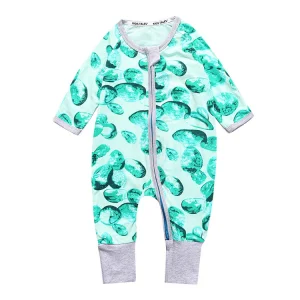
The global infant wear market is undergoing a significant transformation driven by ecological awareness and physiological safety demands. Bamboo fabric, technically known as bamboo viscose or lyocell, has emerged as the premier choice for premium babywear. According to recent B2B market analytics, global demand for sustainable infant apparel is growing at a compound annual rate of over 8.5%. This growth is driven by three main factors: physical performance, biological safety, and environmental renewability.
From a biological perspective, infant skin is up to 30% thinner than adult skin, making it highly sensitive to residual agrochemicals and synthetic finishes commonly found in traditional polyester and conventionally-grown cotton. Bamboo fibers possess natural physical attributes that address these concerns. Their cross-section is filled with micro-gaps and micro-holes, providing excellent moisture absorption and ventilation. This helps prevent infant heat rash and contact dermatitis by keeping the microclimate around the baby’s skin dry and thermally regulated.
SECTION 2: GLOBAL PROCUREMENT DYNAMICSKey Requirements for B2B Supply Chain Partners
Global apparel buyers face challenges with quality consistency, regulatory audits, and lead times. Buying bamboo baby clothes from China requires a deep understanding of local manufacturing capacity, supply ecosystems, and international testing standards. Premium sourcing relies on raw material supply security, traceably certified processing, and advanced industrial automation.
Reliable suppliers control their supply chain starting with the raw bamboo pulp. China’s natural bamboo forests, particularly in Sichuan, Fujian, and Zhejiang, provide a steady supply of high-grade raw materials. When raw bamboo is converted into fiber, leading suppliers use closed-loop organic solvent processes that recycle over 99% of processing agents, minimizing chemical runoff. For buyers in North America and Europe, proving this eco-friendly pathway is critical for Customs clearance, green marketing claims, and brand integrity.
SECTION 3: FABRIC TECHNOLOGYAdvanced Material Engineering: Bamboo Cotton Blends & Micro-Weaves
Our research and development lines focus on optimized blending technologies. While 100% bamboo viscose offers exceptional softness, blending it with long-staple organic cotton improves dimensional stability, wash durability, and tensile strength. This makes it ideal for the active movements of infants and toddlers.
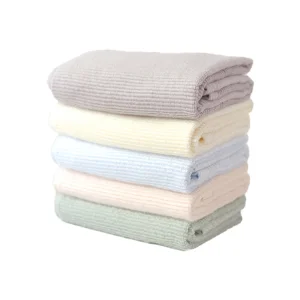
A typical high-performance blend is 70% organic bamboo and 30% organic cotton, woven at weights of 200g to 210g. This specific weight distribution provides the ideal thickness for season-to-season transitions, maintaining structural integrity through repeated industrial washing. Additionally, we use chemical-free mechanical finishing instead of synthetic softening agents, ensuring the fabrics remain naturally soft, hypoallergenic, and highly breathable throughout their lifecycle.