China has become a major sourcing destination for Sleepwear Set products, ranging from cotton pajama pairs to bamboo lounge collections. Its manufacturers serve private labels, retailers, hospitality brands, and emerging direct-to-consumer companies.
The opportunity is substantial, but supplier selection requires more than attractive factory photos. Grand View Research valued the global sleepwear market at approximately USD 12.8 billion in 2023. Its report also forecasts steady growth through 2030, supported by wellness awareness, online retail, and demand for comfortable home clothing. Statista’s apparel research similarly identifies China as a leading force in global clothing production and export activity.
Quality remains the real question.
Dr. Rebecca Robbins, a sleep researcher at Harvard Medical School, has said, “Sleep is not a luxury; it is a biological necessity.” That idea influences modern sleepwear design. Softer fibers, breathable structures, relaxed cuts, and carefully finished seams now matter beside unit price.
This guide examines leading Chinese Sleepwear Set manufacturers through practical criteria. These include material consistency, sampling speed, production capacity, customization, certifications, communication, and delivery performance. A polished sample can still hide uneven sizing or weak elastic recovery. That is where many buyers misjudge suppliers.
The best factory is not always the largest. It may be the one that documents fabric testing, explains production limits, and corrects mistakes quickly. Buyers should request current certifications, reference samples, factory evidence, and clear quality agreements. Some supplier information may remain difficult to verify. That deserves honest scrutiny.
The manufacturers discussed below offer different strengths, from flexible small-batch production to large-scale private-label manufacturing. Their suitability depends on your market, budget, timeline, and quality expectations.
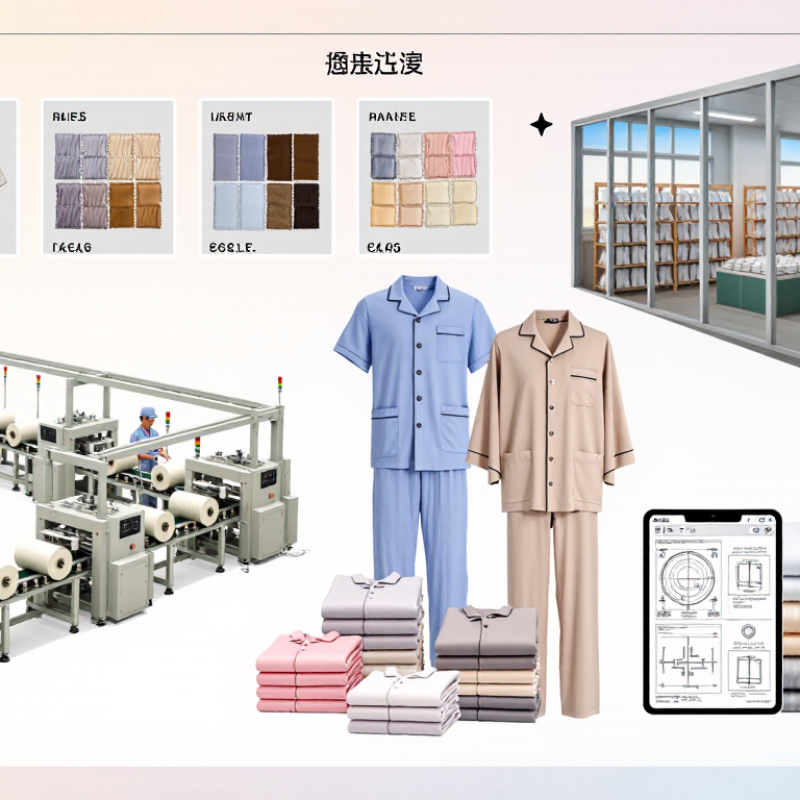
What Defines a Leading Sleepwear Set Manufacturer in China?
A leading sleepwear set manufacturer in China is defined by consistent execution, not attractive catalogs alone. Experienced teams understand how cotton, modal, bamboo blends, and recycled fibers behave after washing. They test shrinkage, colorfastness, seam strength, and fabric pilling before bulk production. These checks matter when a pajama set must remain soft after repeated use.
Technical expertise also appears in pattern development. Skilled technicians adjust sleeve width, waist tension, and neckline shape for different markets. They can explain why a fabric feels cool, warm, heavy, or slightly clingy. Clear communication is essential. Reliable manufacturers provide realistic sampling timelines, detailed measurement charts, and traceable production records. They should also welcome third-party inspections and share testing documents from qualified laboratories.
No factory gets every sample perfect. That is normal, but hiding defects is not. A responsible manufacturer records corrections and verifies them before shipping. Buyers should ask about fabric sourcing, worker training, quality checkpoints, and capacity during busy seasons. A factory may promise fast output, yet weak planning can create uneven stitching or late deliveries. In my view, the strongest supplier is not the one making the loudest claims. It is the one showing evidence, admitting limitations, and improving small details, such as folded hems, secure drawstrings, and accurate size labels.
How China’s Sleepwear Manufacturing Industry Is Organized
Who Are the Top Sleepwear Set Manufacturers in China?
China’s sleepwear manufacturing industry is organized around regional clusters, not one central production system. Guangdong supports export-oriented factories and flexible small-batch production. Jiangsu and Zhejiang offer strong knitting, dyeing, printing, and fabric-finishing capacity. Fujian is known for efficient cut-and-sew operations. The structure is efficient, but not perfectly tidy. Many manufacturers outsource embroidery, packaging, or fabric treatment to nearby specialist workshops. According to UN Comtrade data, China exported approximately US$293.6 billion in textile and apparel products in 2023. This scale supports deep supplier networks and competitive material sourcing.
The market usually operates through three factory levels. Integrated manufacturers control fabric development, sampling, production, and inspection. Specialized factories focus on sewing, thermal wear, or modal and cotton blends. Trading-led suppliers coordinate several workshops but may offer less production visibility. The China National Textile and Apparel Council reported continued pressure on textile margins in 2023. Therefore, low prices alone can hide weaker quality controls. During supplier evaluations, buyers should inspect fabric testing records, sewing lines, needle-control procedures, and final random inspections. A polished showroom proves little.
Tips: Request a complete production map. Ask who dyes the fabric, who sews the garments, and who performs inspections. Check shrinkage after washing, not only before shipment. The 2024 Textile Exchange Materials Market Report also highlights rising demand for traceable fibers. That expectation is reshaping supplier selection. Still, traceability can remain incomplete. Ask for evidence, and allow time to verify it.
Who Are the Top Sleepwear Set Manufacturers in China? — How China’s Sleepwear Manufacturing Industry Is Organized
A typical manufacturing workflow connects product development, fabric sourcing, cutting, sewing, finishing and quality checks, then packing and shipment. Each bar represents one workflow stage—not market share, factory count, or a company ranking.
Which Chinese Manufacturers Are Notable for Sleepwear Sets?
Notable Chinese sleepwear manufacturers usually stand out through measurable production strengths, not attractive catalogs. Integrated factories in Guangdong often handle fabric sourcing, cutting, sewing, packing, and export documentation under one roof. This can shorten sampling time. Knitwear specialists in Zhejiang are known for soft cotton jersey, modal blends, ribbed cuffs, and stable size grading. Silk-focused workshops in Jiangsu may offer smoother finishes, careful piping, and lightweight summer sets.
A reliable supplier should provide fabric composition reports, shrinkage results, colorfastness records, and clear production tolerances. Ask to inspect seams around the neckline, waistband, and pocket corners. These areas reveal workmanship quickly. For everyday pajamas, buyers often compare 180–220 gsm cotton, brushed finishes, and flat seams that reduce skin irritation. Manufacturers with in-house pattern teams can adjust sleeve length, rise, and fit for different markets. That matters more than a polished showroom.
Small-batch OEM factories can support detailed customization, but their capacity may change during peak seasons. Larger exporters usually offer stronger quality systems, yet communication can feel slower. No factory is perfect. A sample may fit well while bulk pieces show minor measurement drift. One practical safeguard is a pre-production sample, followed by an independent inspection against approved measurements. Buyers should also review worker safety records, packaging accuracy, and response times before signing an order. A supplier that admits limitations may be more dependable than one promising everything.
How to Compare Quality, Customization, and Production Capacity
Who Are the Top Sleepwear Set Manufacturers in China?
The strongest manufacturers are not always the largest factories. Compare their fabric control, sewing accuracy, and communication habits. Ask for fabric composition, GSM, colorfastness, and shrinkage results. A reliable supplier can explain each result clearly. Request a pre-production sample, then wash it three times. Check twisted seams, loose threads, waistband recovery, and print cracking. Details matter.
Customization needs more than a digital mockup. Confirm available fabrics, dyeing options, size grading, labels, packaging, and pattern development. Ask whether one technician manages your sample revisions. This reduces repeated mistakes. Review the measurement chart beside a physical sample. Small errors become expensive across thousands of sets. Inspect the cuffs. I once saw a soft fabric fail because its cuffs stretched after washing. The sample looked perfect at first.
Production capacity should be measured, not simply promised. Request monthly output, active sewing lines, staffing levels, and peak-season lead times. Compare minimum order quantities with your forecast. A factory producing 20,000 sets monthly may struggle with a sudden 100,000-set order. Ask for a production schedule and inspection checkpoints. Independent quality inspections add useful evidence. Still, factory data can change. Recheck capacity before signing. Measure twice. Good decisions come from samples and records, not confident presentations.
What Buyers Should Check Before Choosing a Supplier
Choosing a sleepwear set manufacturer in China requires more than comparing prices. Buyers should inspect fabric quality, stitching, production capacity, and communication before placing an order. Ask for recent samples, not only catalog photos. Check the fabric weight, softness, shrinkage, colorfastness, and seam strength after washing. Small details matter. A loose waistband can create costly returns.
A reliable supplier should explain its minimum order quantity, lead time, packaging method, and quality control process. Request factory photographs, production records, and independent laboratory reports when needed. Verify whether the factory handles cutting, sewing, finishing, and packing internally. Outsourcing is not always a problem, but unclear subcontracting creates risk. Written specifications should cover measurements, tolerances, fabric composition, labels, and acceptable defects.
Visit the facility if possible, or arrange a live video inspection. Watch how workers measure panels and store finished garments. Ask how rejected pieces are recorded. In my supplier reviews, I have sometimes focused too heavily on product samples. That was a mistake. A beautiful sample does not prove stable mass production. I now compare pre-production samples with random pieces from later batches. Buyers should also test communication during a small trial order. Slow replies before payment rarely improve afterward. Leave room for honest revision. Suppliers may promise fast delivery, but seasonal capacity can change quickly.
Conclusion
China’s sleepwear manufacturing industry includes large-scale factories, specialized workshops, and export-oriented suppliers serving different market segments. A leading Sleepwear Set manufacturer is typically defined by consistent fabric quality, skilled workmanship, reliable production management, and the ability to meet international buyer requirements. Manufacturers may offer materials such as cotton, modal, satin, or blended fabrics, along with options for private labeling, custom designs, size grading, packaging, and flexible order quantities.
When comparing suppliers, buyers should evaluate product quality, customization capabilities, production capacity, lead times, communication, and quality-control procedures. It is also important to request samples, confirm fabric composition, review measurement charts, and clarify minimum order quantities, payment terms, inspection processes, and shipping responsibilities. A dependable supplier should provide transparent specifications, realistic delivery schedules, and clear support throughout product development and production. By carefully checking these factors, buyers can select a suitable Chinese manufacturer for their Sleepwear Set collection and establish a stable, efficient, and mutually beneficial sourcing relationship.